Super Mario World – Super Nintendo (SNES)
Game Overview
| Detail | Information |
|---|---|
| Game | Super Mario World |
| Platform | Super Nintendo Entertainment System (SNES) |
| Release Date | November 21, 1990 (Japan); August 23, 1991 (North America); 1992 (Europe) |
| Developer | Nintendo EAD |
| Publisher | Nintendo |
| Director / Producer | Takashi Tezuka / Shigeru Miyamoto |
| Music | Koji Kondo |
| Players | 1–2 (alternating turns) |
| Sales | Approximately 20.61 million copies |
Story and Setting
How Super Mario World PlaysAt its heart,
Mario’s next big change, the jump to full 3D, came six years later with Super Mario 64.
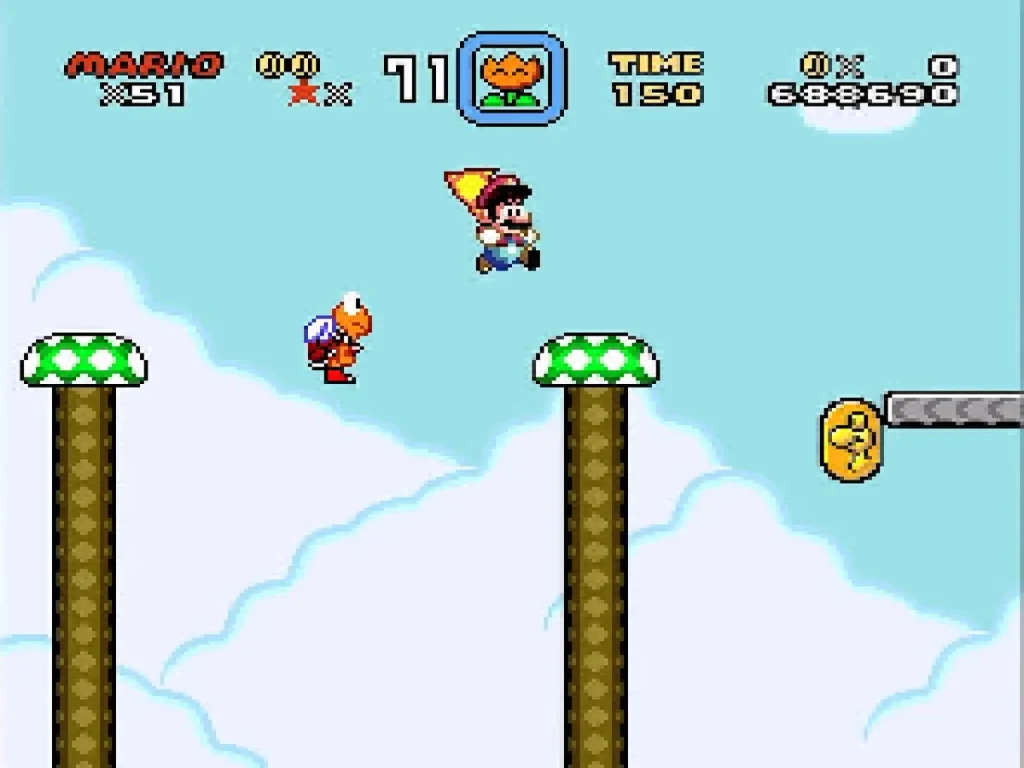
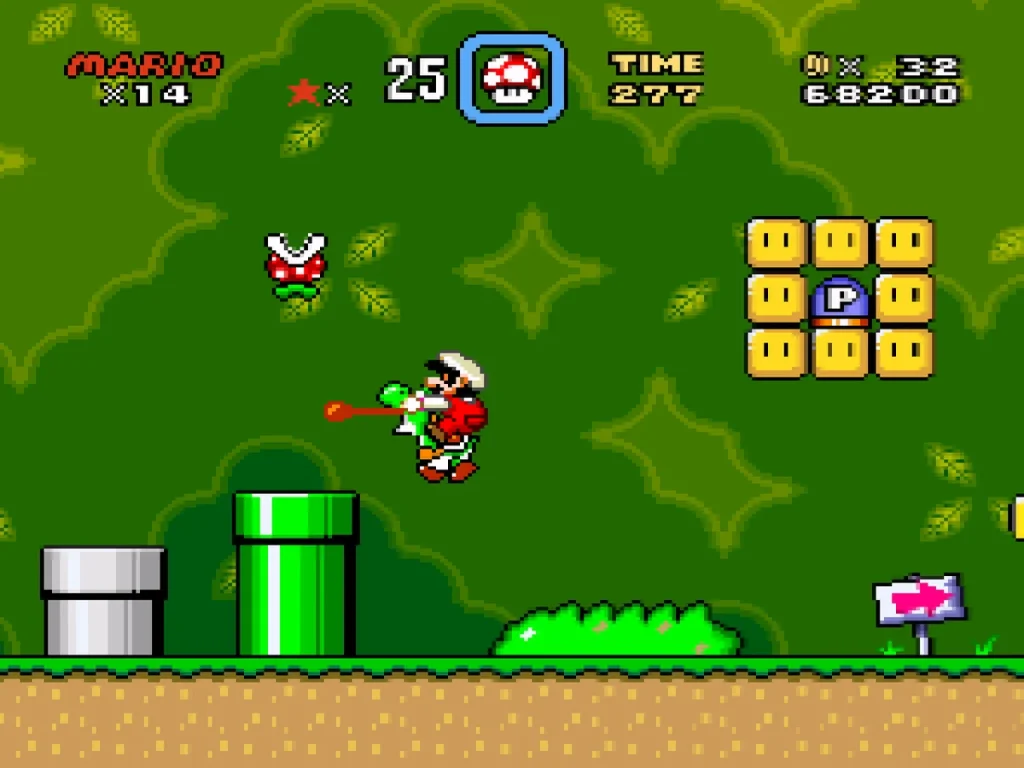
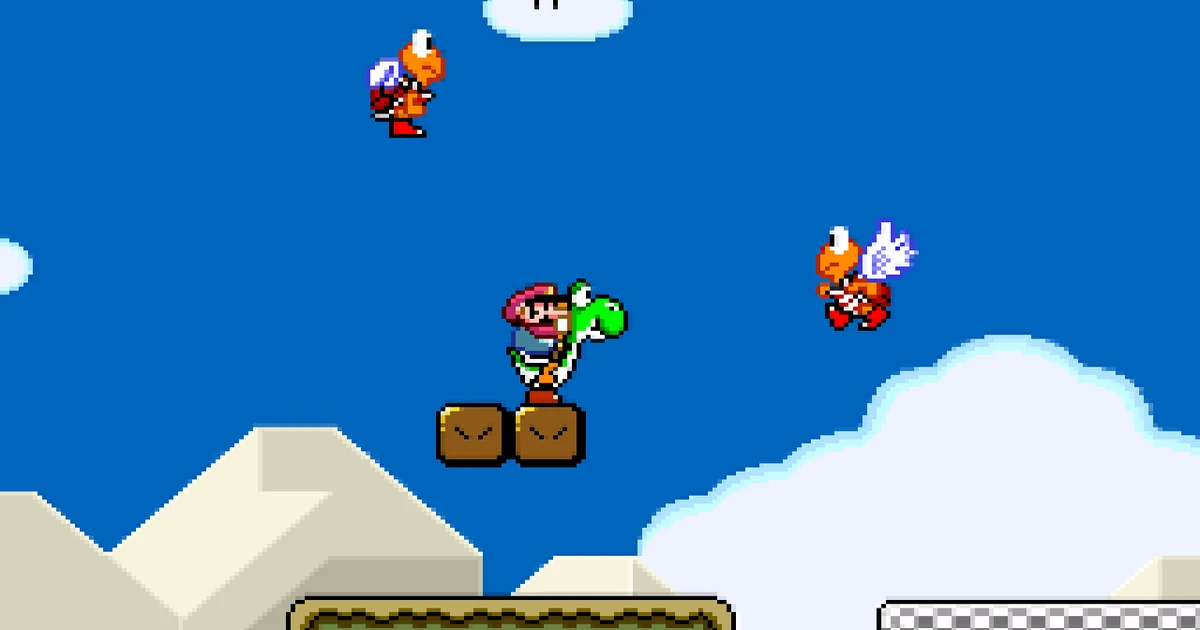
Mario also has more ways to move. The spin jump lets him bounce off some enemies without taking damage, and with a power-up, it can break certain blocks. At the top of the screen, a reserve item box holds one extra power-up, which drops automatically when Mario takes a hit, or you can release it yourself.
Key Features
Worlds and Secret Exits
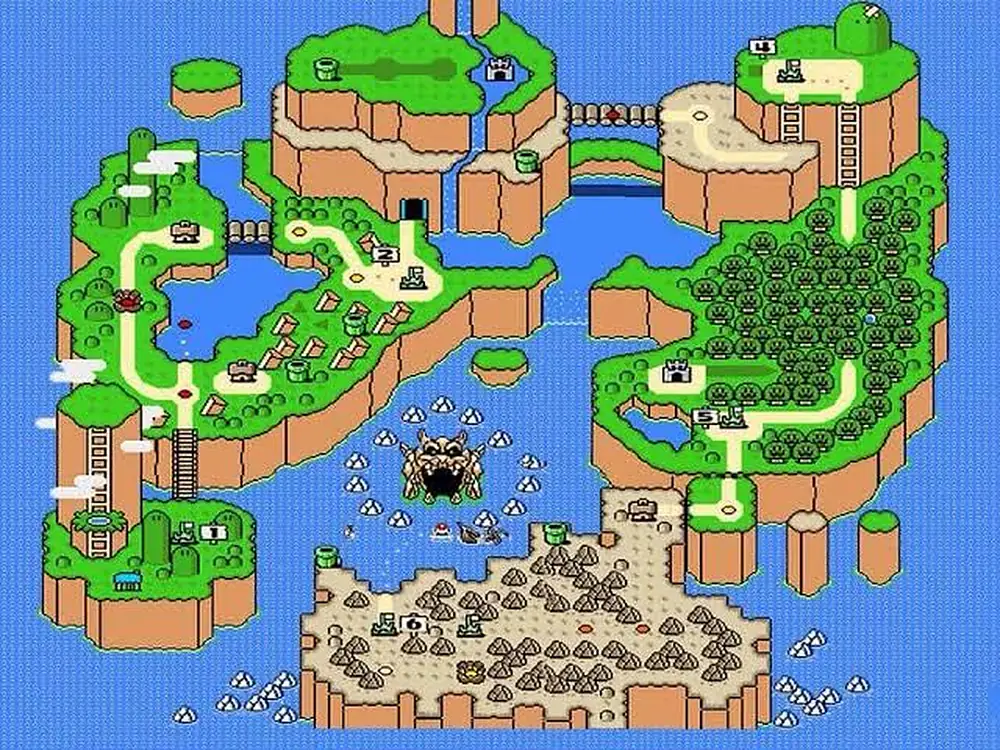
Dinosaur Land has seven main areas: Yoshi’s Island, Donut Plains, Vanilla Dome, Twin Bridges, Forest of Illusion, Chocolate Island, and the Valley of Bowser. Each one brings its own landscapes, enemies, and level challenges. Ghost Houses have maze-like puzzles, and castles and fortresses end with boss fights.
Many levels have hidden exits, usually reached by finding a key and using it on a keyhole. These exits open new paths across the map, including the Star Road, a network of warp points that can shorten the trip to Bowser’s castle.
For a challenge, the Special Zone offers eight difficult levels. It has eight difficult levels, and you reach it from Star World. Completing it changes the look of the overworld and several enemies, rewarding thorough exploration.
Two-Player Mode
The original SNES version lets two players take turns instead of playing simultaneous co-op. The first player plays as Mario, the second as Luigi. They can take turns exploring the overworld map and exchange progress. The L and R buttons let players trade extra lives, making it easier to keep going when one player is running low.
Graphics and Sound
Super Mario World makes excellent use of the SNES hardware. More colorful settings, larger character sprites, and layered scrolling backgrounds give courses a deeper sense of depth than the earlier NES titles. The graphic style stays clear and readable even when levels are packed with enemies and obstacles.
Koji Kondo’s soundtrack is another distinctive feature. Many stages use variations of the same core theme, adapted to fit the context. When Mario rides Yoshi, the song adds percussion. A subtle but noteworthy alteration in the soundtrack.
How to Play Super Mario World Today
The easiest official way is the SNES library in Nintendo Switch Online, which has included Super Mario World since Nintendo launched its SNES games in September 2019. It also comes built into the 2017 Super NES Classic Edition, and the original cartridge works on any Super Nintendo. You can no longer buy the Wii, Wii U, and 3DS Virtual Console versions because those shops have closed. For more classics with official releases, see our list of retro games you can play legally without emulators, and if you own the cartridge, our guide to backing up games you own explains your options.
Frequently Asked Questions
Is Super Mario World the same game as Super Mario Bros. 4?
Yes. In Japan, the game was released as Super Mario World: Super Mario Bros. 4. The name links it to the earlier NES Super Mario Bros. games, though the international release is known simply as Super Mario World.
How many exits does Super Mario World have?
Super Mario World has 96 exits. The save screen tracks how many exits you have discovered, and finding all 96 is the usual goal for players aiming for full completion.
Can you play Super Mario World with two players?
Yes. The original SNES version supports two players, but they take turns rather than playing on screen together. One player controls Mario and the other controls Luigi.
Can you save anywhere in the original SNES game?
No. The original SNES version saves progress after completing certain stages, including castles, fortresses, Ghost Houses, and Switch Palaces. The Game Boy Advance version, Super Mario Advance 2, added save options not available in the original SNES release.