What Are the Best Retro Games to Play With an Emulator?
The best Retro Games to play on an emulator are titles that still hold up today because of good core design – tight controls, creative level or world design, and gameplay that doesn’t rely on antiquated technology to feel engaging. Games like Chrono Trigger, Super Metroid, The Legend of Zelda: A Link to the Past, Metal Gear Solid, and Super Mario World are often recommended because they offer timeless gameplay that runs well on modern emulators, with good controller compatibility and the save-state advantage that helps smooth out some of the rough edges of older hardware.
This guide covers the real factors that make a Retro Game “emulator friendly,” and then walks you through a curated list of hit titles for NES, SNES, Game Boy/GBA, Sega Genesis, PlayStation 1, Nintendo 64, and arcade systems, sorted by console, skill level, and available time to play.
What Makes a Retro Game Good for Emulation?
Not every classic game translates equally well to emulation. A few factors separate games that feel great on modern hardware from ones that feel like a history lesson.
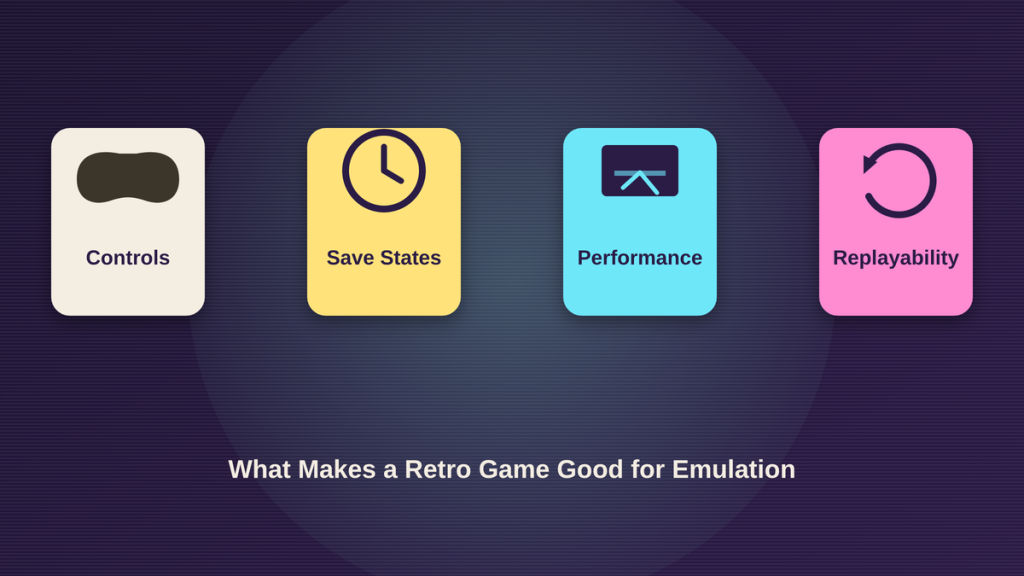
Gameplay that isn’t dependent on original hardware quirks. Games that rely on tight, understandable mechanics—platforming, puzzle logic, turn-based fighting—tend to age better than games that relied on analog peculiarities of old CRT screens or specific control devices (like light guns or motion peripherals).
Controller support. Games created around a simple button layout — a D-pad and two to four action buttons — translate smoothly to current USB or Bluetooth controllers. It can be harder to set up games that had odd peripherals.
Save states. One of the great benefits of emulation over the original hardware is that you may save anywhere and not only at checkpoints. This is particularly great for severe action games and extended RPGs.
Performance and emulation accuracy. Popular, well-documented systems (NES, Genesis, SNES, Game Boy) have mature,e highly accurate emulators. There are certain compatibility difficulties with less common or more complex hardware (some arcade boards, some N64 titles that use unique chips, etc.), thus it pays to check up on a game’s emulation status before jumping in.
Replayability. Games with branching paths, speedrun possibilities, or just satisfying core loops (fighting games, shoot-em-ups, platformers) reward repeat plays, which counts when you’re choosing what to spend your time on today.
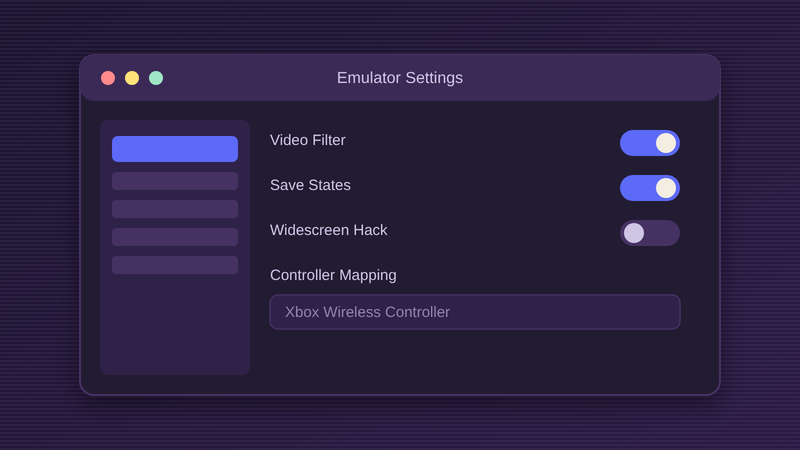
Graphical improvement options. Most emulators enable upscaling , filtering , and widescreen hacking . These do not affect the game itself, but make the 2D pixel art and early 3D models look a lot cleaner on contemporary televisions.
Accessibility for beginners. Some classic genres like early 3D platformers or unforgiving arcade adaptations are harder to learn. Simple goals, easy-to-learn controls, and modern QoL provided by emulator features make games easier to get into.
Best Retro Games to Play With an Emulator
The following games were selected based on their lasting design merit, not nostalgia or name familiarity. Each item lists the original platform, genre, why the game holds up, how well it works in emulation, a popular emulator, and a general beginner-friendliness rating.
NES
1. Super Mario Bros. 3
- Genre: Platformer
- Why it’s worth playing: Many people think it was one of the most creative platform games of its time, with a world map, lots of different power-ups, and levels that still feel new.
- Why it works well with emulation: With its simple controls, short levels, and forgiving performance requirements, it’s a prime choice for emulation.
- Recommended emulator: Mesen (accuracy-focused) or FCEUX.
- Beginner difficulty: Easy to moderate.
- Verdict: An essential starting point for NES-ERA platforming.
2. Contra
- Genre: Run-and-gun
- Why it’s worth playing: Fast, chaotic,c and cooperative action with iconic level design.
- Why it works well with emulation: Short runtime and simple two-button controls suit quick sessions.
- Recommended emulator: FCEUX / Mesen.
- Beginner difficulty: Hard.
- Verdict: Best enjoyed with save states or a cooperative partner.
3. Mega Man 2
- Genre: Action-platformer
- Why it’s worth playing: The early edition in the series features a tight boss-order strategy and distinctive weapon-based gameplay.
- Why it works well with emulation: The precise controls work well on modern gamepads, and the save states make it less difficult.
- Recommended emulator: Mesen.
- Beginner difficulty: Moderate to hard.
- Verdict: A genre-defining action game that benefits enormously from save-state convenience.
4. The Legend of Zelda
- Genre: Action-adventure
- Why it’s worth playing: Template for open-world adventure games, with non-linear exploration being uncommon at the time.
- Why it works well with emulation: Easy top-down mechanics and a battery-save system that emulators replicate reliably.
- Recommended emulator: Mesen.
- Beginner difficulty: Moderate.
- Verdict: A foundational adventure game still worth exploring.
SNES
5. Super Metroid
- Genre: Action-adventure / Metroidvania
- Why it’s worth playing: A gradually expanding map, Atmospheric exploration, and precise platforming make it a genre high point.
- Why it works well with emulation: Save states are very helpful for this game because it involves a lot of exploration and some tricky platforming.
- Recommended emulator: Snes9x or bsnes.
- Beginner difficulty: Moderate.
- Verdict: A must-play game frequently cited as one of the best games of all time.
6. The Legend of Zelda: A Link to the Past
- Genre: Action-adventure
- Why it’s worth playing: A dungeon design, dual-world structure, and item progression that influenced nearly every action-adventure game since.
- Why it works well with emulation: Clean pixel art scales well with upscaling filters; simple controller mapping.
- Recommended emulator: Snes9x.
- Beginner difficulty: Easy to moderate.
- Verdict: One of the most approachable and influential Zelda entries.
7. Chrono Trigger
- Genre: JRPG
- Why it’s worth playing: Time-travel narrative, multiple endings, and combat that avoids random encounters in favor of visible enemies.
- Why it works well with emulation: Long playtime benefits from save states between sessions; text and UI remain sharp with light upscaling.
- Recommended emulator: Snes9x.
- Beginner difficulty: Easy to moderate.
- Verdict: Often ranked among the best RPGs ever made, and a strong entry point into the genre.
8. Super Mario World
- Genre: Platformer
- Why it’s worth playing: Refined platforming mechanics, secret exits, and a memorable overworld.
- Why it works well with emulation: Beginner-friendly pacing and simple controls make it an ideal first SNES game.
- Recommended emulator: Snes9x or bsnes.
- Beginner difficulty: Easy.
- Verdict: A great starting point for players new to retro platformers.
9. Donkey Kong Country
- Genre: Platformer
- Why it’s worth playing: Pre-rendered 3D visuals were groundbreaking for the time, paired with tight platforming and secret-hunting.
- Why it works well with emulation: Runs smoothly with no known compatibility issues; controls map easily.
- Recommended emulator: Snes9x.
- Beginner difficulty: Moderate.
- Verdict: Still visually and mechanically satisfying decades later.
10. Street Fighter II (Turbo/Super editions)
- Genre: Fighting
- Why it’s worth playing: Defined the modern fighting game genre, with a cast and mechanics still referenced today.
- Why it works well with emulation: Short match length suits quick sessions; benefits from a proper fight stick or arcade-style controller if available.
- Recommended emulator: Snes9x.
- Beginner difficulty: Moderate (execution-focused).
- Verdict: Essential for anyone interested in fighting game history.
Sega Genesis / Mega Drive
11. Sonic the Hedgehog 2
- Genre: Platformer
- Why it’s worth playing: Faster, more refined than the original, with the added Tails co-op option.
- Why it works well with emulation: Short levels and simple controls; runs flawlessly on all major emulators.
- Recommended emulator: Kega Fusion or BlastEm.
- Beginner difficulty: Easy.
- Verdict: The high point of the Genesis-era Sonic games.
12. Gunstar Heroes
- Genre: Run-and-gun
- Why it’s worth playing: Frenetic pacing, inventive boss fights, and a weapon-combination system ahead of its time.
- Why it works well with emulation: Fast sessions and simple controls suit pick-up-and-play emulation.
- Recommended emulator: Kega Fusion.
- Beginner difficulty: Moderate to hard.
- Verdict: One of the most replayable action games on the system.
13. Streets of Rage 2
- Genre: Beat ’em up
- Why it’s worth playing: Widely considered the best entry in the beat-’em-up genre from this era, with a standout soundtrack.
- Why it works well with emulation: Great in short co-op sessions; simple three-button layout.
- Recommended emulator: BlastEm.
- Beginner difficulty: Easy to moderate.
- Verdict: A must-play for fans of side-scrolling action.
Game Boy / Game Boy Color
14. Pokémon Gold and Silver
- Genre: RPG
- Why it’s worth playing: Expanded on the original Pokémon formula with a day/night cycle, a second region, and refined mechanics.
- Why it works well with emulation: Long playtime benefits from save states; simple sprite graphics look great upscaled.
- Recommended emulator: mGBA.
- Beginner difficulty: Easy.
- Verdict: Frequently cited as a series high point.
15. The Legend of Zelda: Link’s Awakening
- Genre: Action-adventure
- Why it’s worth playing: Surprisingly deep, self-contained adventure for a handheld title with dungeon design on par with console entries.
- Why it works well with emulation: Clean upscaling of low resolution; dungeons that are short-session friendly.
- Recommended emulator: mGBA.
- Beginner difficulty: Moderate.
- Verdict: One of the best handheld adventure games of its generation.
Game Boy Advance
16. Pokémon FireRed and LeafGreen
- Genre: RPG
- Why it’s worth playing: Modernized remakes of the original Pokémon games that make life better.
- Why it works well with emulation: Reliable emulation accuracy and a friendly entry point for RPG beginners.
- Recommended emulator: mGBA.
- Beginner difficulty: Easy.
- Verdict: One of the most approachable RPGs on the list.
17. Fire Emblem (GBA, 2003 / “Fire Emblem”)
- Genre: Tactical RPG
- Why it’s worth playing: Lots of Western players came to the tactical RPG genre with permadeath stakes and solid map design.
- Why it works well with emulation: Turn-based pacing suits save states between long tactical battles.
- Recommended emulator: mGBA.
- Beginner difficulty: Moderate.
- Verdict: A strong entry point into strategy RPGs.
18. Metroid Fusion
- Genre: Action-adventure / Metroidvania
- Why it’s worth playing: Tighter, more linear than Super Metroid, with a tense atmosphere and strong pacing.
- Why it works well with emulation: The compact map uses save states during tense sequences.
- Recommended emulator: mGBA.
- Beginner difficulty: Moderate.
- Verdict: A great follow-up for players who enjoyed Super Metroid.
Nintendo 64
19. The Legend of Zelda: Ocarina of Time
- Genre: Action-adventure
- Why it’s worth playing: Pioneered 3D action-adventure conventions—targeting systems, context-sensitive actions—still used today.
- Why it works well with emulation: Modern N64 emulators can support widescreen and texture improvements that make the graphics much clearer.
- Recommended emulator: Project64 or simple64.
- Beginner difficulty: Moderate.
- Verdict: A landmark title that remains highly playable today.
20. GoldenEye 007
- Genre: First-person shooter
- Why it’s worth playing: A landmark console FPS with a gripping single-player campaign and groundbreaking split-screen multiplayer.
- Why it works well with emulation: Multiplayer is easiest with a few modern controllers set up through the emulator input settings.
- Recommended emulator: Project64.
- Beginner difficulty: Moderate.
- Verdict: Best experienced with friends for the full historical impact.
21. Super Mario 64
- Genre: 3D platformer
- Why it’s worth playing: Established core conventions of 3D platforming and camera control.
- Why it works well with emulation: Options for enhancement (higher resolution, smoother framerate) make this feel so much better than on original hardware.
- Recommended emulator: simple64 or Project64.
- Beginner difficulty: Moderate.
- Verdict: Essential for understanding the roots of 3D platforming, with real emulation-side visual upgrades.
PlayStation 1
22. Final Fantasy VII
- Genre: JRPG
- Why it’s worth playing: A sprawling, cinematic RPG that introduced many Western players to the genre at scale.
- Why it works well with emulation: Save states are great for long runtimes. Enhancement options can smooth out the game’s low native resolution.
- Recommended emulator: DuckStation.
- Beginner difficulty: Easy to moderate.
- Verdict: A genre landmark, still worth the time investment.
23. Castlevania: Symphony of the Night
- Genre: Action-adventure / Metroidvania
- Why it’s worth playing: Created the modern template for the Metroidvania genre with RPG progression layered on top of exploration-based level design.
- Why it works well with emulation: Smooth 2D sprite work scales up nicely, and the ability to save anywhere fits its exploration structure.
- Recommended emulator: DuckStation.
- Beginner difficulty: Moderate.
- Verdict: One of the most influential action-adventure games of its generation.
24. Metal Gear Solid
- Genre: Stealth-action
- Why it’s worth playing: Cinematic presentation and stealth mechanics that influenced an entire genre.
- Why it works well with emulation: Modern emulators also allow enhanced internal resolution rendering, which makes the game look so much better than it would on original hardware.
- Recommended emulator: DuckStation.
- Beginner difficulty: Moderate.
- Verdict: A defining stealth game that benefits meaningfully from emulation-side visual upgrades.
Arcade
25. Street Fighter III: 3rd Strike
- Genre: Fighting
- Why it’s worth playing: Streamlined execution techniques and a defensive parrying strategy that competitive players still study today.
- Why it works well with emulation: Short matches suit quick sessions; benefits from an arcade-style controller for precise inputs.
- Recommended emulator: MAME.
- Beginner difficulty: Hard.
- Verdict: A technically deep fighting game best approached after building fundamentals elsewhere.
26. Metal Slug
- Genre: Run-and-gun
- Why it’s worth playing: Detailed hand-drawn animation and relentless, high-energy level design.
- Why it works well with emulation: Short, replayable stages fit pick-up-and-play sessions well.
- Recommended emulator: MAME.
- Beginner difficulty: Hard.
- Verdict: A visual and mechanical showcase of 2D arcade action at its peak.
Best Retro Games by Console
Best NES Games
Super Mario Bros. 3, Contra, Mega Man 2, and The Legend of Zelda represent the console’s strongest mix of platforming, action, and adventure design.
Best Genesis Games
Sonic the Hedgehog 2, Streets of Rage 2, and Gunstar Heroes showcase the console’s fast-paced action identity.
Best SNES Games
Super Metroid, The Legend of Zelda: A Link to the Past, Donkey Kong Country, Chrono Trigger, Super Mario World, and Street Fighter II cover the system’s platforming, RPG, and fighting-game strengths.
Best Game Boy/GBA Games
Pokémon Gold and Silver, Pokémon FireRed/LeafGreen, Link’s Awakening, Metroid Fusion, and Fire Emblem highlight the strength of handheld RPGs and adventure games from this era.
Best PS1 Games
Metal Gear Solid, Final Fantasy VII, and Castlevania: Symphony of the Night show the system’s range across RPGs, stealth-action, and Metroidvania design.
Best N64 Games
Ocarina of Time, Super Mario 64, and GoldenEye 007 represent the console’s role in pioneering 3D game design.
Best Retro Games for Beginners
For players new to retro gaming, forgiving controls, eye-catching and clear objectives matter more than technical sophistication.
Best Retro Games for Long Play Sessions
RPGs, adventure games, and strategy titles reward extended time investment and rich, evolving systems.
- Chrono Trigger (SNES) — Multiple endings and a satisfying, moderate-length JRPG structure.
- Pokémon Gold and Silver (Game Boy Color) — Two regions’ worth of exploration and collection.
- Final Fantasy VII (PS1) — A sprawling narrative with dozens of hours of content.
- Ocarina of Time (N64) — A large connected world with numerous dungeons and side content.
- Fire Emblem (GBA) — Tactical depth that rewards careful, longer planning sessions.
Best Retro Games for Quick Sessions
Arcade-style, platforming, and fighting games are built around short, replayable bursts of play.
- Street Fighter II (SNES) / Street Fighter III: 3rd Strike (Arcade) — Matches typically last a few minutes.
- Contra (NES) — Levels are brief but demanding.
- Metal Slug (Arcade) — Stages are short and intensely replayable.
- Gunstar Heroes (Genesis) — Fast pacing suits short bursts of play.
- Sonic the Hedgehog 2 (Genesis) — Levels are designed to be completed quickly.
Which Emulator Should You Use?
Emulator choice depends on the original system, since emulation accuracy and feature sets vary by platform and project.
Accuracy-centric emulators like bsnes or Mesen try to emulate the original hardware as accurately as possible, which is important for a handful of games with odd technical requirements. Emulators that focus more on performance and features (like Snes9x or DuckStation) tend to provide more choices to configure, such as save states, remapping of controllers, and graphic enhancements, while still being highly realistic for the great majority of games.
Note that the emulator software itself is generally lawful to build, distribute,e and use. The ROMs or disk images it runs are what’s legally separate. See the FAQ below for more on that issue.
Frequently Asked Questions
1. What is the best retro game to emulate? There’s no one answer, depending on your favorite genre, but Super Metroid, Chrono Trigger, and The Legend of Zelda: A Link to the Past are some of the most often recommended games for their combination of good original design and seamless, well-supported emulation.
2. Which console has the best games for emulation? The SNES is often mentioned for having a particularly deep, well-preserved library across platforming, RPG, and action genres, while the PS1 and N64 libraries are also noteworthy, especially for those interested in early 3D game creation.
3. What is the easiest retro game to emulate? Systems that are extensively documented and widely emulated, such as Super Mario World (SNES) or Sonic the Hedgehog 2 (Genesis), tend to run with the least compatibility difficulties and the easiest control setup.
4. What are the best SNES games to emulate? The Super Nintendo is home to perennial top picks like Super Metroid, The Legend of Zelda: A Link to the Past, Chrono Trigger, Super Mario World, and Donkey Kong Country.
5. What are the best N64 games to emulate? The top suggested titles starting on the system are The Legend of Zelda: Ocarina of Time, Super Mario 64, and GoldenEye 007.
6. What are the best PS1 games to emulate? Final Fantasy VII, Metal Gear Solid, and Castlevania: Symphony of the Night are frequently mentioned as some of the system’s most influential and re-playable games.
7. Are emulators legal? Creating, sharing, and using emulator software (the program that simulates the original hardware) is lawful in most countries, since it does not include any protected game material. Laws do differ by country,ry so it’s worth investigating what the local rules are if you’re not sure.
8. Is downloading ROMs legal? This is legally separate from the legality of emulators, and varies by jurisdiction and circumstances. Even if you own a physical copy of the game, it is copyright infringement in many countries to download copyrighted ROMs that you do not own. Some jurisdictions allow personal backups of games you legally own. Laws vary greatly, so it’s a good idea to look up guidelines that apply to your area.